
Northern Lights in Russia 2026: Best Places, Best Time & Complete Travel Guide

Few natural phenomena on Earth compare to the Northern Lights (Aurora Borealis) — a dancing curtain of green, pink, and violet light that ripples silently across the Arctic sky. While Norway, Iceland, and Finland dominate most “aurora bucket list” articles, Russia’s Arctic north is one of the most underrated — and most spectacular — destinations to witness this phenomenon. From the Kola Peninsula’s snow-covered tundra to the remote wilderness of Siberia, Russia offers some of the darkest skies, lowest light pollution, and longest viewing seasons in the world. Because the country stretches across eleven time zones and touches the Arctic Ocean along an enormous coastline, it holds an extraordinary variety of aurora-watching environments — coastal fjords, birch and pine taiga, frozen lakes, volcanic tundra, and high mountain plateaus — all sitting beneath the auroral oval for months at a time. In this 2026 Northern Lights in Russia travel guide, we’ll cover everything you need to know: the best places to see the aurora, the best time to go, how the aurora actually forms, how to plan your trip, what to pack, where to stay, and answers to the most frequently asked questions. Whether you’re a first-time aurora chaser or a seasoned photographer looking for a new frontier, this guide will help you plan a smarter, more successful trip. What Causes the Northern Lights? A Quick Science Primer The aurora borealis happens when charged particles from the sun (solar wind) collide with gases in Earth’s upper atmosphere, releasing energy as visible light. Green auroras — the most common — come from oxygen molecules roughly 100–300 km above the ground, while rarer red and purple hues come from nitrogen and higher-altitude oxygen collisions. These particles are guided toward the poles by Earth’s magnetic field, which is why the phenomenon is strongest in a ring-shaped zone called the auroral oval, centered on the magnetic poles. Russia’s Arctic regions — particularly the Kola Peninsula — sit almost directly beneath this oval for much of the winter, which is exactly why the region produces such frequent and vivid displays. Solar activity itself follows an 11-year solar cycle, moving between quiet and highly active phases. During “solar maximum” years, the sun releases more frequent solar flares and coronal mass ejections, which translates into more frequent, brighter, and more widespread auroras — sometimes visible even outside the usual Arctic latitudes. Why See the Northern Lights in Russia? Best Places to See the Northern Lights in Russia 1. Murmansk & the Kola Peninsula (Top Pick) Murmansk is the largest city north of the Arctic Circle and widely considered the best place to see the Northern Lights in Russia. Its high latitude, combined with easy access from Moscow and St. Petersburg via direct flights, makes it the top choice for aurora hunters who want reliability without an extreme logistical challenge. Best spots near Murmansk: 2. Karelia (Near Finland’s Border) Karelia’s forests, frozen lakes, and traditional wooden villages create a fairy-tale backdrop for the aurora. It’s a great option for travelers who also want to experience Russian countryside culture, wood-fired banyas (saunas), ice fishing, and husky or reindeer sledding between aurora sessions. Because Karelia sits slightly further south than Murmansk, displays are less frequent but still strong during active geomagnetic periods, and the region’s calm lakes make for beautiful mirror-reflection photography. 3. Arkhangelsk Region A lesser-known alternative to Murmansk, Arkhangelsk offers a more authentic, off-the-beaten-path experience with far fewer tourists and equally strong aurora activity during solar maximum years. The White Sea coastline and traditional wooden architecture of the region add extra character to any aurora-focused itinerary. 4. Norilsk & the Siberian Arctic For serious adventurers, Norilsk — one of the world’s northernmost cities — offers incredible aurora displays over dramatic industrial-meets-tundra scenery, though logistics are more complex due to permit requirements for foreigners in this closed administrative zone. This route is best suited for experienced travelers working with a specialized local agency. 5. Kamchatka Peninsula While mainly known for volcanoes, geysers, and bears, Kamchatka’s remote, unpolluted skies occasionally reward patient travelers with striking auroras, especially paired with unique volcanic scenery in the background — a combination almost impossible to find anywhere else on Earth. 6. Yakutia (Sakha Republic) One of the coldest inhabited places on the planet, Yakutia offers exceptionally clear, dry Arctic air and minimal cloud cover in winter, which can mean excellent aurora visibility for travelers prepared to handle temperatures that regularly fall below -40°C. Best Time to See the Northern Lights in Russia The best time to see the Northern Lights in Russia is between late September and early April, when nights are long and dark enough for the aurora to be visible. Month Visibility Notes September–October Good Longer nights begin, milder temperatures, good for shoulder-season trips November–December Excellent Polar night begins in the far north; near 24-hour darkness in Murmansk January–February Excellent Peak season, coldest but often the clearest and driest skies March Very Good Strong aurora activity with slightly milder weather than midwinter April Fair Nights getting shorter, season winding down, last reliable window Pro tip: The polar night in Murmansk (early December to mid-January) means near-constant darkness, maximizing your aurora-watching windows around the clock. Combine this with checking the KP-index (geomagnetic activity forecast) — aim for a KP of 3 or higher for strong, wide-reaching displays, and always cross-check the local cloud-cover forecast, since clear skies matter just as much as geomagnetic activity. READ MORE https://tourjunket.com/bali-vs-maldives-honeymoon-which-is-better-in-2026/ Is 2026 a Good Year for Northern Lights? Yes. The sun operates on an approximately 11-year solar cycle, and heightened solar activity around this period is producing more frequent and vivid aurora displays worldwide — including across Arctic Russia. This makes 2026 one of the best years in over a decade to plan a Northern Lights trip, as elevated solar activity increases both the frequency and the geographic reach of visible auroras. How to Plan Your Northern Lights Trip to Russia Where to Stay for the Best Aurora Views What to Pack for an Arctic Aurora
Bali vs Maldives: Which Is Better for a Honeymoon? (2026 Complete Guide)
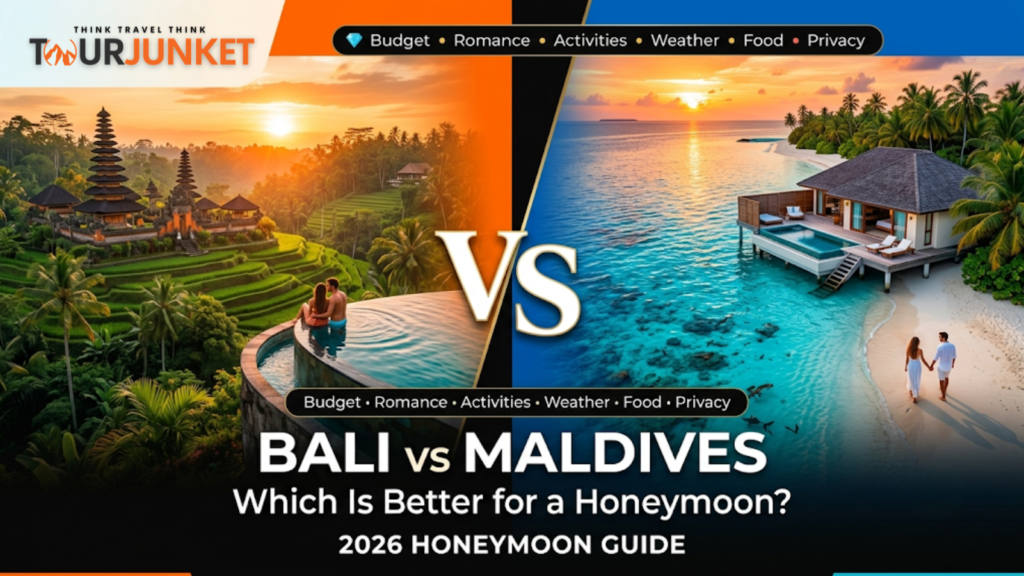
Planning your honeymoon is one of the most exciting parts of getting married — and also one of the most overwhelming. Two destinations dominate every “best honeymoon destinations” list: Bali and the Maldives. Both promise turquoise water, dreamy sunsets, and unforgettable romance, but they offer very different experiences. In this guide, we break down Bali vs Maldives for honeymoon travel across budget, scenery, activities, food, privacy, and more — so you can decide which one deserves your “just married” stamp. Quick Comparison Table Factor Bali Maldives Average Daily Budget $80–$250/day $300–$1,200/day Best For Adventure + romance mix Pure relaxation & privacy Iconic Stay Cliffside villas, rice terrace resorts Overwater bungalows Culture & Sightseeing Rich (temples, art, markets) Minimal (mostly resort-based) Flight Connectivity Excellent, budget-friendly Limited, often pricier Ideal Trip Length 7–10 days 4–6 days Nightlife Yes (Seminyak, Canggu) Almost none (resort bars only) Why This Bali vs Maldives Honeymoon Debate Even Matters Every year, thousands of newlyweds sit down with the same two tabs open in their browser — one for Bali resorts, one for Maldives overwater villas — trying to decide where to spend the first trip of their married life. It’s not a trivial choice. Your honeymoon sets the tone for how you and your partner travel together going forward, and both destinations have earned their reputation as top-tier romantic getaways for very different reasons. Bali has become a magnet for couples who want their honeymoon to feel like an experience, not just a vacation. It’s a destination where you can hike to a hidden waterfall in the morning, get a couples massage in the afternoon, and watch the sunset over a clifftop temple in the evening — all in the same day. The Maldives, by contrast, has built an entire tourism industry around the idea of disappearing together. No crowds, no itinerary, no distractions — just you, your partner, and the ocean. Understanding the philosophy behind each destination is the first step to figuring out which one actually fits your relationship, your travel style, and your budget. READ MORE Thailand vs Bali vs Vietnam: Which Is Better for Your 2026 Holiday? Bali for Honeymoon: The Case for Paradise Island Bali, Indonesia, is famous for blending romance with adventure. It’s not just about lounging by the pool — couples can explore lush rice terraces, ancient temples, waterfalls, and a buzzing café culture. Why Couples Choose Bali Best Honeymoon Spots in Bali A Sample Bali Honeymoon Flow Most couples structure their Bali honeymoon in three chapters. They start in Ubud, spending two or three nights surrounded by rice terraces and jungle, using the time to slow down, do a couple’s spa day, and maybe take a sunrise trek up a nearby volcano. From there, they move to the Uluwatu or Seminyak coast, trading jungle views for clifftop infinity pools, beach clubs, and some of Bali’s best fine dining. Many itineraries end with a day trip or overnight stay on Nusa Penida or Nusa Lembongan, where the water turns a shade of turquoise that rivals the Maldives itself. This kind of “chapters” structure is part of what makes Bali so appealing for honeymooners — the trip naturally builds variety and pacing into itself, so it never feels repetitive even over a 10-day stay. What Bali Does Best Maldives for Honeymoon: The Case for Ultimate Seclusion The Maldives is the gold standard of luxury honeymoon destinations. Made up of over a thousand coral islands, it’s built almost entirely around private, all-inclusive resort experiences. Why Couples Choose the Maldives Best Honeymoon Resorts Style in the Maldives A Sample Maldives Honeymoon Flow Unlike Bali, a Maldives honeymoon isn’t structured around moving between towns — it’s structured around slowing down completely. Most couples fly into Malé and take a short seaplane or speedboat transfer directly to their resort island, and from that point on, they rarely leave. Days blend together in the best possible way: breakfast on your private deck, a morning snorkel session over the house reef, an afternoon nap in an overwater hammock, and dinner on the sand under string lights. Many resorts also offer a signature “castaway” experience — a private, uninhabited sandbank set up with a table for two, reachable only by boat. Because there’s little need to plan an itinerary, the Maldives suits couples who genuinely want their honeymoon to feel like an extended, uninterrupted exhale. What the Maldives Does Best Bali vs Maldives: Detailed Comparison 1. Cost Bali is significantly more budget-friendly, letting couples enjoy luxury villas, private pools, and fine dining without the Maldives-level price tag. The Maldives, on the other hand, is a premium, often once-in-a-lifetime splurge destination. 2. Romance Factor Both destinations are romantic, but in different ways. Bali blends romance with culture and adventure — think couple’s spa days followed by temple visits. The Maldives is romance in its purest, most secluded form — private villas, private beaches, and zero distractions. 3. Things to Do Bali wins on variety: surfing, waterfalls, temple tours, cooking classes, and nightlife. The Maldives wins on relaxation: snorkeling, diving, sunset cruises, and spa treatments, all without leaving your resort. 4. Weather Both destinations are tropical, but timing matters: 5. Privacy The Maldives is unbeatable when it comes to privacy — many resorts guarantee an entire island to yourselves. Bali offers privacy in villas but is generally a more social, bustling destination. 6. Food and Dining Bali offers enormous culinary range — traditional Indonesian warungs, farm-to-table restaurants in Ubud, beach clubs in Seminyak, and internationally trained chefs opening fine-dining concepts every year. The Maldives, being resort-bound, typically limits you to your resort’s restaurants, though top-tier properties often bring in world-class chefs and offer multiple on-site dining concepts, including underwater and overwater restaurants. 7. Ease of Travel Bali is generally easier and cheaper to reach, with well-connected international flights into Denpasar (Ngurah Rai Airport) from most major hubs in Asia, Australia, and increasingly Europe. The Maldives often requires a long-haul flight into Malé followed by a seaplane or speedboat transfer,
Thailand vs Bali vs Vietnam: Which Is Better for Your 2026 Holiday?
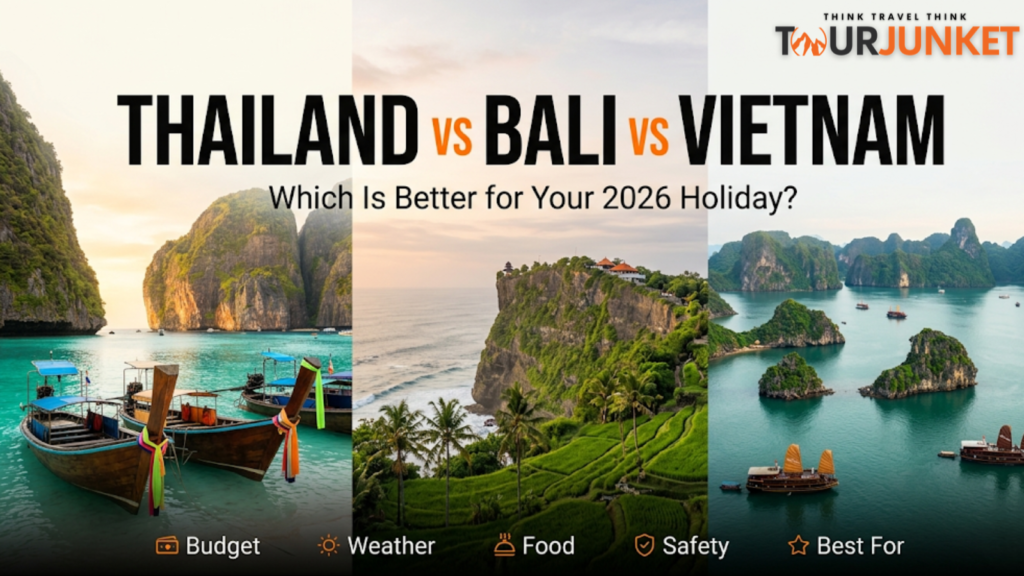
Picking between Thailand vs Bali vs Vietnam for your 2026 holiday is one of the best “problems” a traveler can have — all three destinations deliver stunning beaches, rich culture, and incredible food at a fraction of Western prices. But each one has a very different personality, and choosing the wrong fit can mean a holiday that doesn’t match your vibe. In this guide, we break down Thailand vs Bali vs Vietnam across the factors that actually matter — cost, weather, visas, food, nightlife, safety, and who each destination is really made for — so you can book your 2026 trip with confidence. Quick Answer: Which Should You Choose? Thailand vs Bali vs Vietnam at a Glance Factor Thailand Bali (Indonesia) Vietnam Best for First-timers, islands, nightlife Wellness, honeymoons, beach clubs Adventure, culture, budget travel Average daily budget $35–$70 $30–$65 $25–$50 Peak season Nov–Mar Apr–Oct (dry season) Nov–Apr (north-south varies) Visa-free stay (many nationalities) Up to 30 days (reduced from 60 in 2026) 30 days (visa on arrival extendable) Up to 45 days for several nationalities Signature experience Full Moon Party, Phi Phi Islands Uluwatu cliffs, Ubud rice terraces Ha Long Bay, Hoi An lantern streets English proficiency Moderate (high in tourist zones) Moderate Lower outside major cities Thailand in 2026: Best for Easy, All-in-One Travel Thailand remains the most beginner-friendly country in Southeast Asia. Bangkok’s international airport connects easily to Phuket, Krabi, Koh Samui, and Chiang Mai, so you can mix a buzzing capital city with island time in a single two-week trip. Why travelers love Thailand in 2026: Important 2026 update — Thailand visa rules: Thailand’s Cabinet approved a rollback from the pandemic-era 60-day visa exemption to a tiered system, with many nationalities now capped at 30 days visa-free and some reduced to 15 days. Thailand also now requires every arriving foreign national to complete the Thailand Digital Arrival Card (TDAC) online before landing. Check your nationality’s current allowance before booking flights. Downsides: Popular islands like Phi Phi and parts of Phuket can feel overcrowded and overpriced during peak season (December–February). READ MORE https://tourjunket.com/travel-budget-calculator-2026/ Bali in 2026: Best for Wellness and Aesthetic Escapes Bali continues to be Southeast Asia’s wellness capital. Between Canggu’s beach clubs, Ubud’s yoga studios, and Uluwatu’s cliffside sunsets, Bali is built for travelers who want their holiday to double as a reset. Why travelers love Bali in 2026: Downsides: Traffic in South Bali (Seminyak, Canggu, Kuta) has worsened noticeably, and popular temples and viewpoints often require timed entry due to overtourism. Bali is technically part of Indonesia, so travelers hoping to combine it with mainland Southeast Asia will need a separate flight connection. Vietnam in 2026: Best Value and Most Diverse Landscapes Vietnam is the pick for travelers who want maximum variety per dollar. In a single trip you can hike misty mountains in Sapa, cruise the limestone karsts of Ha Long Bay, wander the lantern-lit streets of Hoi An, and eat some of the best street food on the planet — all while spending noticeably less than in Thailand or Bali. Why travelers love Vietnam in 2026: Downsides: Long north-south distances mean more domestic flights or long train/bus rides if you want to see multiple regions. English is less widely spoken outside major tourist hubs. Cost Comparison: Thailand vs Bali vs Vietnam Budget is often the deciding factor for a 2026 holiday. Here’s a realistic daily spend for a mid-range traveler (accommodation, food, local transport, and one activity): If your 2026 holiday is budget-driven, Vietnam wins. If you want a balance of comfort and affordability, Thailand is the safest bet. Bali sits in the middle but can spike quickly if you stick to trendy beach clubs. Weather and Best Time to Visit in 2026 This means Thailand and Vietnam’s north both peak in the same window, while Bali’s best months actually fall opposite Thailand’s — useful if you’re trying to combine two destinations in one longer 2026 trip. Food Comparison All three countries Thailand vs Bali vs Vietnam world-renowned food destinations, but the styles differ: Safety and Ease of Travel Thailand and Bali both have mature tourism industries with well-established hospitals, tour operators, and English-speaking support in tourist zones, making them slightly easier for first-time Southeast Asia travelers. Vietnam has caught up quickly, especially in Hanoi, Da Nang, and Ho Chi Minh City, though rural areas require more independent planning. Which One Should You Pick for 2026? Conclusion Choosing between Thailand vs Bali vs Vietnam ultimately comes down to what you want your 2026 holiday to feel like. If you want an easy, well-connected trip with islands, nightlife, and unbeatable street food, Thailand checks every box. If you’re chasing a slower, wellness-focused escape with rice terraces, beach clubs, and romantic sunsets, Bali is hard to beat. And if you want the most landscapes, culture, and value for your money, Vietnam comes out on top. There’s no wrong choice here — just the right one for your travel style, budget, and the experience you’re after. Whichever destination you pick, book early, double-check your 2026 visa requirements, and travel during the right season to make the most of your Thailand vs Bali vs Vietnam trip. READ MORE Thailand vs Bali vs Vietnam – Don’t Book Until You Read This!
Travel Budget Calculator: How Much Does an International Trip Cost in 2026?

Planning a trip abroad and stuck on the one question every traveler asks first — “How much is this actually going to cost me?” You’re not alone. Thousands of people search for a reliable travel budget calculator every month because generic estimates online rarely match real-world spending. In this guide, we break down exactly how to calculate your international trip cost, what factors change your budget the most, and how to build a personalized travel budget planner you can actually trust — whether you’re backpacking through Southeast Asia or planning a luxury European getaway. Why You Need a Travel Budget Calculator Before You Book Most travelers make the mistake of booking flights first and figuring out the budget later. This almost always leads to overspending. A proper trip cost calculator helps you: If you’re searching “how much does an international trip cost,” the honest answer is: it depends on five core variables. Let’s break each one down. The 5 Core Factors That Determine Your International Trip Cost 1. Flights (Usually 20–35% of Your Budget) International flight costs vary wildly based on: Average international round-trip flight cost (2026): $450–$1,400 depending on region and class. 2. Accommodation (25–35% of Your Budget) This is where your travel style matters most: 3. Food and Dining (15–20% of Your Budget) 4. Local Transportation & Activities (10–20% of Your Budget) Includes public transit, taxis, tours, entry tickets, and experiences. Budget travelers can often manage this for $10–$25/day, while activity-heavy itineraries (diving, safaris, guided tours) can push this well past $50/day. 5. Visa, Insurance & Miscellaneous Costs (5–10% of Your Budget) Often forgotten — but critical: Simple Travel Budget Calculator Formula Here’s a straightforward formula you can use manually or plug into a spreadsheet: Example: 10-Day Trip to Thailand (Mid-Range Style) Category Cost Round-trip flight $650 Accommodation (10 nights × $45) $450 Food (10 days × $25) $250 Local transport & activities (10 days × $20) $200 Visa + Insurance + SIM $90 Emergency buffer (10%) $164 Total Estimated Cost $1,804 This kind of breakdown is exactly what a good international travel cost estimator should give you — a realistic number, not a rounded guess. READ MORE Best Countries to Visit with Kids in 2026: A Family Travel Guide Average International Trip Cost by Region (2026 Estimates) Region Budget Traveler (per day) Mid-Range (per day) Luxury (per day) Southeast Asia $25–$40 $60–$100 $150+ Europe $60–$90 $120–$200 $300+ South America $30–$50 $70–$120 $180+ Middle East $50–$80 $110–$180 $250+ Japan/South Korea $70–$100 $140–$220 $300+ Africa (Safari regions) $60–$100 $150–$250 $400+ These figures reflect accommodation, food, local transport, and activities combined — a helpful reference if you’re comparing destinations for your trip budget planner. 7 Proven Ways to Lower Your International Travel Budget How to Build Your Own Travel Budget Calculator (Spreadsheet Method) If you want full control, create a simple spreadsheet with these columns: This lets you track your international trip budget in real time and adjust spending as you go — far more accurate than any one-size-fits-all online calculator. Final Thoughts There’s no single “correct” number when it comes to international trip costs — it depends entirely on your destination, travel style, and season. But with a clear travel budget calculator formula, a category-by-category breakdown, and a bit of planning discipline, you can travel confidently without financial guesswork. Start with the formula above, plug in your destination’s average daily costs, add your buffer, and you’ll have a realistic, personalized international travel budget — ready before you even book your flight. READ MORE Travel Budget Calculator: How to Estimate Your Trip Cost in 2026 (With Real Numbers)
Best Countries to Visit with Kids in 2026: A Family Travel Guide

Introduction Traveling with children can feel overwhelming — juggling nap schedules, picky eaters, and the constant question of “are we there yet?” But choosing the best countries to visit with kids can turn a stressful trip into a lifetime of memories. Whether you’re looking for family friendly travel destinations with world-class theme parks, safe cities to explore on foot, or budget-friendly getaways packed with kid-approved activities, this guide covers the top picks for 2026. Below, we break down the best kid friendly countries to travel to, what makes each one special for families, and answer the most common questions parents ask before booking a family trip. 1. Japan — Safety, Culture, and Wonder for All Ages Japan consistently ranks among the best family vacation destinations thanks to its low crime rate, spotless cities, and efficient public transport. Kids love the bullet trains, themed cafés, and attractions like Tokyo Disneyland, Universal Studios Japan, and the interactive teamLab digital art museums. Vending machines on every corner and clean public restrooms make day-to-day travel with toddlers surprisingly easy. Why families love it: Extremely safe, unique cultural experiences, excellent food options for picky eaters (noodles, rice dishes, mild flavors). 2. Portugal — Europe’s Underrated Family Gem Portugal has quickly become one of the top family friendly travel destinations in Europe. The Algarve coastline offers calm beaches perfect for young swimmers, while Lisbon’s trams and castles keep older kids entertained. It’s also one of the more affordable Western European countries, making it ideal for budget-conscious families. Why families love it: Warm climate, affordable prices, welcoming locals, and short flight times from most of Europe. 3. Costa Rica — Adventure and Nature Immersion For families who want their kids unplugged and outdoors, Costa Rica delivers with zip-lining, wildlife spotting, and beach days. It’s often cited as one of the best countries to visit with kids who love animals and adventure, thanks to sloth sanctuaries, volcano tours, and rainforest hikes suitable for various age groups. Why families love it: Eco-tourism focus, English widely spoken in tourist areas, plenty of moderate-difficulty activities for kids. 4. New Zealand — Wide Open Spaces and Outdoor Fun New Zealand’s dramatic landscapes, low population density, and family-oriented culture make it a favorite among parents seeking outdoor adventure. Hobbiton tours, glowworm caves, and easy hiking trails cater to kids of all ages, cementing its place among the best family vacation destinations for nature-loving families. Why families love it: Low crime, English-speaking, plenty of space to let kids run free. 5. Canada — Diverse Cities and National Parks Canada blends cosmopolitan cities like Toronto and Vancouver with breathtaking national parks like Banff and Jasper. It’s a reliably one of the top kid friendly countries to travel to for families who want both urban attractions (aquariums, museums) and outdoor experiences (hiking, wildlife viewing) in one trip. Why families love it: High safety standards, excellent healthcare, diverse activities for every age group. 6. Thailand — Budget-Friendly Beaches and Culture Thailand remains a top pick for budget-conscious families searching for family friendly travel destinations in Asia. Islands like Koh Samui offer calm waters for young swimmers, while Bangkok and Chiang Mai provide cultural experiences, elephant sanctuaries, and affordable family accommodations. Why families love it: Low cost of travel, kid-friendly food options, warm hospitality toward children. 7. Australia — Beaches, Wildlife, and Big Cities Australia offers something for every type of family traveler — from the Great Barrier Reef to zoos featuring native wildlife like kangaroos and koalas. Its combination of laid-back beach culture and modern cities makes it one of the best countries to visit with kids looking for both relaxation and adventure. Why families love it: English-speaking, excellent healthcare, wide variety of family activities. READ MORE AT : https://tourjunket.com/vietnam-trip-from-india-2026/ Tips for Choosing the Best Family Travel Destination Conclusion Choosing the best countries to visit with kids doesn’t have to be complicated. Whether you prioritize safety, affordability, culture, or outdoor adventure, destinations like Japan, Portugal, Costa Rica, and New Zealand consistently deliver unforgettable family experiences. Start planning early, involve your kids in the itinerary, and get ready to create lifelong memories together. READ MORE AT: Best Countries to Travel with Kids in 2026 (Safe, Easy and Genuinely Fun for Families)
How to Plan a Vietnam Trip from India: The Complete 2026 Guide
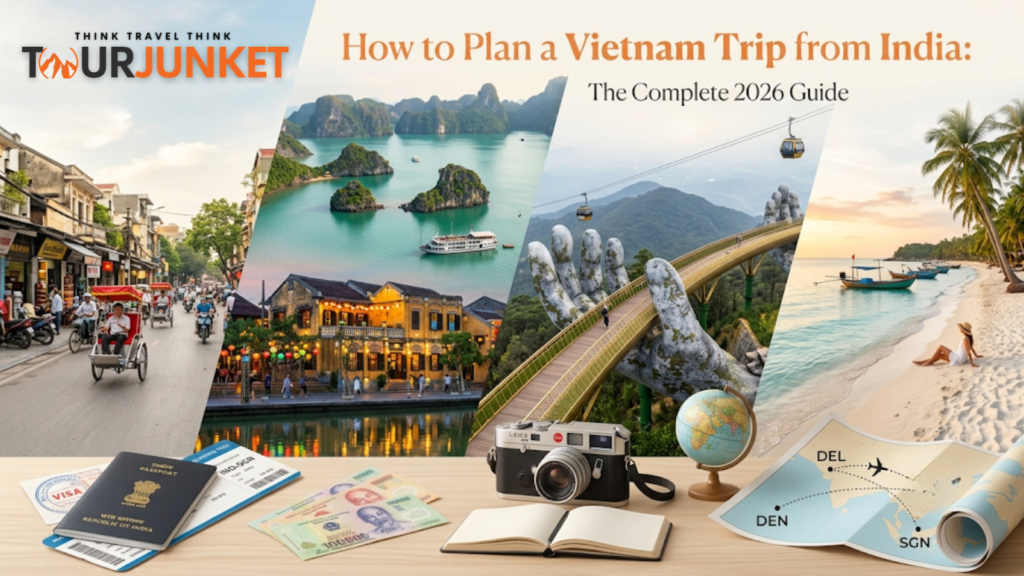
Vietnam Trip from India has quietly become one of the hottest international destinations for Indian travelers — and it’s easy to see why. Direct flights, a favorable exchange rate, stunning landscapes, and visa-friendly processes make it one of the best value-for-money trips outside India. If you’re searching for how to plan a Vietnam trip from India, this guide covers everything: visas, flights, budget, itinerary, and the FAQs everyone asks before booking. Why Indians Are Choosing Vietnam Right Now Vietnam offers a rare mix that Indian travelers love: affordability, direct flight access, food that isn’t too far from home comforts, and postcard scenery from Ha Long Bay to the Mekong Delta. Add in a weak VND against the INR, and a week-long trip can cost less than a domestic Indian vacation in a hill station during peak season. Step 1: Understand the Visa Requirements This is the first thing every Indian traveler needs to sort out. Here’s the current picture: What you’ll need: a passport valid for at least 6 months with two blank pages, a passport-style photo, and (for the e-visa) a scanned copy of your passport’s bio page. Apply Vietnam Trip from India at least 2 weeks before departure to leave room for processing delays. READ MORE AT https://tourjunket.com/india-tourism-2030-roadmap-growth/ Step 2: Book Your Flights Connectivity between India and Vietnam Trip from India has improved significantly. Direct flights now connect major Indian cities — Delhi, Mumbai, Kolkata, Bengaluru, and Ahmedabad — with Vietnam’s key gateways: Hanoi, Ho Chi Minh City, Da Nang, and even Phu Quoc for beach-first trips. Flight time on non-stop routes is roughly 4 to 5.5 hours. Airlines like VietJet Air, Vietnam Airlines, IndiGo, and Air India run these routes, with round-trip fares often falling in a wide range depending on season and how early you book. Booking 6–8 weeks ahead typically gets you the better fares. Tip: Fly into Hanoi if you’re prioritizing the north (Ha Long Bay, Sapa), or Ho Chi Minh City if the Mekong Delta and southern beaches are your focus. Step 3: Pick Your Route and Build an Itinerary Vietnam Trip from India is long and narrow, so most itineraries pick a region rather than trying to cover the whole country in one trip. 7-Day North Vietnam Itinerary 7-Day Central & South Vietnam Itinerary Step 4: Budget Your Trip Vietnam is genuinely budget-friendly for Indian travelers: Step 5: Practical Tips Before You Go Conclusion A Vietnam trip from India is easier — and cheaper — to pull off than most people expect. Sort your e-Visa early, book direct flights 6–8 weeks in advance, pick one region (north or central/south) instead of rushing the whole country, and budget for a vietnam trip from india that’s genuinely kind on the wallet. Whether it’s cruising Ha Long Bay, wandering Hoi An’s lantern-lit streets, or unwinding on Phu Quoc’s beaches, Vietnam delivers a high-value international holiday that’s well within reach for Indian travelers in 2026. READ MORE Vietnam Budget Itinerary: Complete Guide for Affordable Travel
India’s Tourism Industry Eyes a Transformational Future with a 2030 Growth Roadmap

India tourism 2030 industry is standing at an inflection point. With the government, industry bodies, and global organizations aligning around a shared 2030 growth roadmap, the sector is being repositioned from a cultural showcase into a full-fledged economic engine. From ambitious GDP targets to new destination development and infrastructure upgrades, India’s tourism industry 2030 vision is one of the most closely watched growth stories in the global travel economy. In this blog, we break down the key pillars of this roadmap, the numbers driving the conversation, and what this transformation means for travelers, investors, and the hospitality ecosystem. Why India’s Tourism Industry Is at a Turning Point Tourism already contributes an estimated 5-6% to India’s GDP and supports over 84 million jobs, making it one of the largest employment-generating sectors in the country. Yet, despite this scale, in calendar year 2024, India recorded 20.57 million international tourist arrivals, including 9.95 million foreign tourist arrivals, placing the country 20th globally with a 1.4% share of the world’s 1,465 million international arrivals. This gap between India’s cultural and geographic potential and its actual global tourism ranking is exactly why a structured 2030 roadmap has become an industry priority. READ MORE Bali Tour Package from Delhi: Complete Guide, Cost & Itinerary (2026) The Core Target: Doubling Tourism’s GDP Contribution At the heart of the india tourism 2030 roadmap is a bold economic goal. India has set an ambitious goal to double the tourism sector’s contribution to its GDP from the current 5% to 10% by 2030, a target announced by the Union Minister for Tourism and Culture at the Confederation of Indian Industry Annual Business Summit. Industry leaders are echoing this ambition. By india tourism 2030, India is expected to establish tourism among its leading growth sectors by increasing visitor numbers while maximising economic value, regional development and employment generation. Notably, India’s tourism economy contributed around USD 250 billion in 2024, and stakeholders are pushing for measurable, time-bound targets rather than promotional slogans alone. Key Pillars of India’s Tourism 2030 Roadmap 1. Infrastructure-Led Growth Connectivity remains central to the strategy. The plan emphasizes upgrading roads, railways, and airports to create a more accessible and enriching experience for travelers. This is already visible on the ground, as the sector benefits from sustained infrastructure investments, particularly airport capacity expansion in gateway cities such as Mumbai, Bengaluru, Hyderabad and Delhi, alongside improved road and rail connectivity through new expressways and highways. 2. New Destination Development A major part of unlocking growth involves geographic diversification. The government has announced the development of 50 new tourism destinations across the country as part of a holistic growth strategy, aimed at easing pressure on traditional hotspots and spreading tourism revenue more evenly across regions. 3. Domestic Tourism as the Growth Engine While international arrivals get the headlines, domestic travel is the real volume driver. Domestic travelers today account for the vast majority of tourism activity and a substantial share of total tourism spending, supported by steady income growth. Policymakers are also focusing on domestic tourists and encouraging corporate involvement to boost Meetings, Incentives, Conferences, and Exhibitions (MICE) tourism. 4. Spiritual and Experiential Travel Faith-based tourism is emerging as a high-growth niche. Spiritual tourism is one of the fastest-growing travel trends, with pilgrimage circuits and holy destinations such as Varanasi, Rameswaram, Kedarnath, and Shirdi witnessing record footfall. Alongside this, destination weddings, wellness retreats, food-led journeys, sports, and live entertainment events are increasingly complementing traditional religious travel. 5. Global Events as Growth Catalysts Large-scale international events are being used as proof points for India’s readiness. Ahmedabad hosting the india tourism 2030 Commonwealth Games is expected to be an important milestone for the city and India’s broader events ecosystem, testing the country’s ability to deliver complex, large-scale international events. 6. Policy Reforms and Industry Collaboration Industry voices are calling for closer alignment between government and private stakeholders. There is an opportunity to align around india tourism 2030 targets, a shared implementation roadmap, and time-bound policy reforms — positioning tourism as one of India’s most powerful engines of economic growth. 7. Technology and AI Integration Global bodies are also weighing in on how technology reshapes the sector. The World Travel and Tourism Council has projected India’s travel sector to keep growing while AI and technology increasingly transform how travel takes place — not as a threat to jobs, but as an adaptation of the industry to a new interface. India’s Tourism Industry in Global Context Tourism is a massive global economic force, and India is aiming for a larger slice of it. Travel and tourism contributed over USD 11.6 trillion to global GDP in 2025, equivalent to 9.8% of the global economy and supporting 366 million jobs worldwide — one in every nine jobs globally. Against this backdrop, the United States remained the world’s largest travel and tourism economy in 2025, followed by China, Germany, the United Kingdom, Japan, and France. India’s 2030 roadmap is designed to help it climb meaningfully in these global rankings. Beyond 2030: The Bigger Vision for 2047 The india tourism 2030 targets are, in many ways, a stepping stone toward a larger national ambition. India is targeting 100 million international tourists by 2047, alongside a 7% GDP contribution from tourism by 2030, requiring strategic focus on visitor spending, length of stay, and repeat visitation rates. This long-term vision also includes expanding tourism across tier-two and tier-three cities to reduce over-concentration in traditional hotspots like Delhi and Agra. Industry events are already being built around this narrative. At the Indian Hospitality Summit & Awards, industry leaders charted India’s tourism roadmap, stressing hospitality-led growth, investment, policy reforms and community-driven circuits for Destination 2030. What This Means for Travelers, Investors, and Businesses Conclusion India’s tourism 2030 industry is no longer being discussed purely in terms of cultural heritage or visitor counts — it’s being reframed as a measurable economic growth engine. With a clear india tourism 2030 roadmap built around infrastructure, new destinations, domestic travel, spiritual and experiential tourism, and stronger
Passport Fees in India 2026: New Rates and How to Apply Online
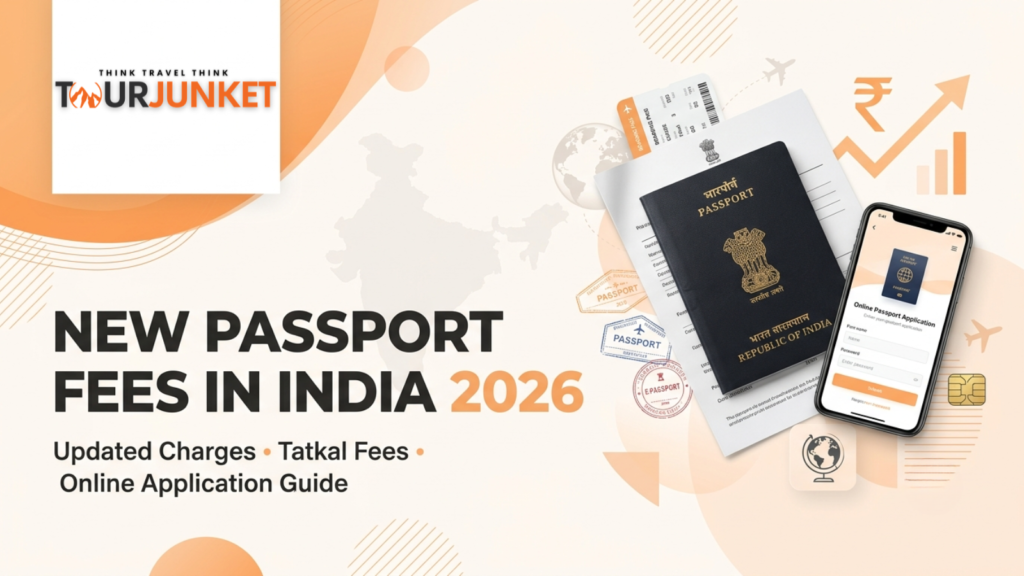
passport fees in India 2026 went up on July 1, 2026, the first change in 14 years. If you’re applying for a passport online in India any time soon, whether it’s a fresh application, a renewal, or an urgent Tatkal passport, here’s exactly what you’ll pay under the new passport rules 2026, and a full walkthrough of how to apply. What Changed: New Passport Fees in India 2026 The Ministry of External Affairs revised the fee schedule through the Passports (Amendment) Rules, 2026, notified on June 25 and effective from July 1. The last update was back in 2012, so this is a significant jump across every category: fresh applications, renewals, Tatkal passport fees, minors, and lost or damaged replacements. Standard 36-Page Passport Category Old Fee New Fee Normal ₹1,500 ₹2,500 Tatkal ₹3,500 ₹5,000 Jumbo 60-Page Passport Category Old Fee New Fee Normal ₹2,000 ₹3,500 Tatkal ₹4,000 ₹6,000 Minor Passport (Under 18), 36-Page Category Old Fee New Fee Normal ~₹1,000 ₹1,750 Tatkal ~₹3,000 ₹4,250 Lost or Damaged Passport Replacement (36-Page) Category Fee Normal ₹5,000 Tatkal ₹7,500 A flat ₹500 Passport Seva Kendra (PSK) fee applies on top of every application, Tatkal included. One discount survives the revision: fresh applications (not renewals) for children up to age 8 and senior citizens above 60 still get 10% off. Why Passport Fees Went Up in 2026 Fees hadn’t moved since 2012. In the meantime, India rolled out chip-enabled e-passports with stronger security features, and the Passport Seva network passport fees in India 2026 expanded with more centers, tighter cybersecurity, and faster digital processing. The government’s reasoning is that the old fee structure hadn’t kept pace with the actual cost of running that infrastructure. Two things often get confused with this fee hike but aren’t part of it. The e-passport chip rollout started in May 2025 and became standard by November 2025, that’s old news. And the birth certificate requirement for date-of-birth proof only applies to applicants born on or after October 1, 2023; anyone born earlier can still use a PAN card, school certificate, or driving licence. For Contact – Go to our Website What This Means If You’re Applying Soon Spread across a passport’s 10-year validity, the extra ₹1,000 works out to roughly ₹100 a year, less than a single visa fee. Not a reason to panic. But if your passport expires within the next year, or you already have international travel planned for 2026 or 2027, there’s no upside to waiting. Your fee is locked in the passport fees in India 2026 moment you pay online, not on your appointment date or issue date. How to Apply for a Passport Online in India: Step-by-Step Here’s the current process for applying for a passport online in passport fees in India 2026, whether it’s your first passport or a renewal. Documents Required for Passport Application If you’re planning international travel and want to make sure your documents are in order before your PSK appointment, this is exactly where our team can help, right alongside your visa and itinerary planning. Read More : – Passport application fee to go up from July 1
Bali Trip Under ₹70,000 from India — Is It Actually Possible in 2026?
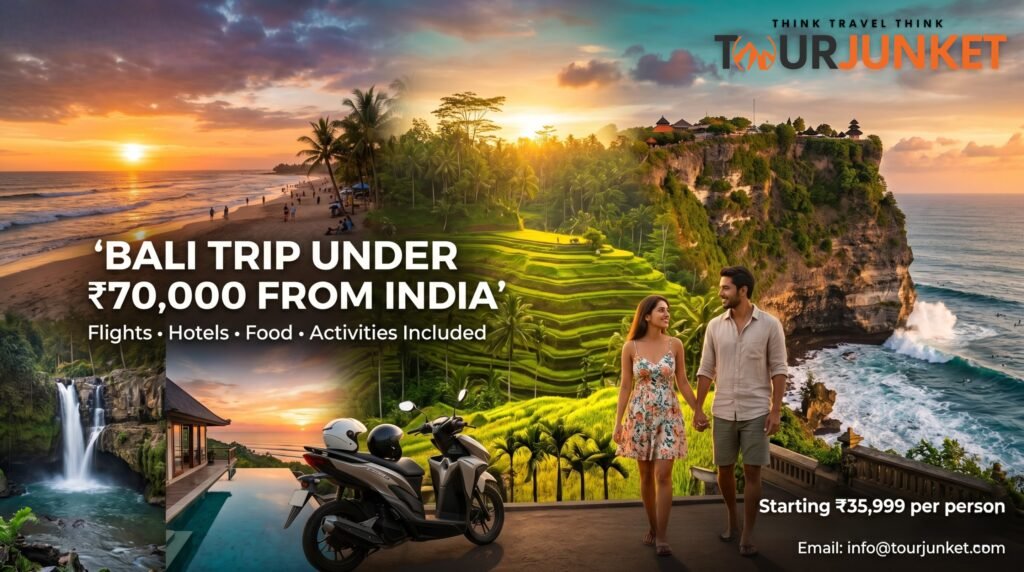
Yes. And no, you don’t have to compromise on the good stuff. Bali has this reputation for being expensive — Instagram villas, infinity pools, overpriced cocktails. But here’s what most travel blogs won’t tell you: if you plan smart, a Bali trip from India under ₹70,000 per person is completely doable. Flights, hotel, food, activities — the whole thing. We’ve helped hundreds of Indian travelers make this trip happen. Here’s exactly how. Why Bali Still Beats Every Other International Destination at This Budget Compared to Europe or even the Maldives, Bali gives you more for less. The Indonesian Rupiah works heavily in your favour — your ₹500 note buys a decent meal, a scooter rental, and still leaves change. Visa-on-arrival is free for Indians (yes, free), the flight time from most Indian cities is around 5–8 hours, and the variety of experiences — beaches, temples, rice terraces, nightlife, wellness — is unmatched at this price point. Thailand is the usual comparison. Bali edges it out for honeymooners and couples. Thailand wins on nightlife and backpacker culture. Choose based on what you want from the trip. Bali Trip Cost Breakdown from India (Per Person) Here’s a realistic budget for a 5-night, 6-day Bali trip: Expense Budget Range Return Flights (Delhi/Mumbai) ₹18,000 – ₹28,000 Hotel (3-star, twin sharing) ₹8,000 – ₹15,000 Activities & Entry Tickets ₹5,000 – ₹8,000 Food (local cafés + 1-2 nice meals) ₹4,000 – ₹6,000 Local Transport & Transfers ₹3,000 – ₹5,000 Visa, SIM & Miscellaneous ₹2,000 – ₹3,000 Total Estimate ₹40,000 – ₹65,000 Book with TourJunket’s packaged deal and you can lock this in even cheaper — packages start at ₹35,999 per person for groups. 5-Day Bali Itinerary for Indian Travelers Day 1 — Arrival + Seminyak Land in Denpasar, check in, and don’t rush. Evening walk on Seminyak Beach, dinner at a beachside café. Day 2 — Ubud Day Trip Rice terraces at Tegallalang, Tirta Empul temple, and the famous Ubud Monkey Forest. Try the local nasi goreng for lunch — ₹150 and genuinely good. Day 3 — Waterfalls & Adventure Tegenungan Waterfall in the morning, white water rafting on the Ayung River in the afternoon. This is the day groups and solo travelers enjoy most. Day 4 — Uluwatu & Sunset Uluwatu Temple on the cliff edge, Kecak dance at sunset (book in advance), seafood dinner at Jimbaran Bay. Couples, this is your evening. Day 5 — Beach Day + Kuta Kuta Beach, shopping at Seminyak Square, spa session. Bali massages cost ₹400–₹700 for an hour. Worth every rupee. Day 6 — Departure Early checkout, airport transfer, fly home. Top Things to Do in Bali Best Time to Visit Bali from India April to June and September to October are the sweet spots — dry weather, thinner crowds, and flight prices that haven’t spiked yet. December to January is peak season. Beautiful, but flights jump by 30–40% and hotels fill up fast. If you’re planning a Christmas or New Year trip, book at least 3 months out. July–August is busy with international tourists but still manageable. Money-saving tip: fly mid-week. Tuesday and Wednesday departures are consistently cheaper than weekend flights. Travel Tips for Indians Visiting Bali Visa: Free visa-on-arrival for Indian passport holders (up to 30 days). No prior application needed. Currency: Carry USD or exchange INR to IDR at Bali’s money changers — better rates than airport counters. Avoid the ones on Kuta’s main strip; they’re known to shortchange tourists. Safety: Bali is safe for solo travelers, including women. Stick to well-lit areas at night and keep an eye on your belongings in crowded markets. Packing: Light cottons, reef-safe sunscreen, a sarong (required at temple entries), and a power bank. Bali’s weather is humid year-round. Read More : Bali Travel Regulations & Entry Requirements Why Book Your Bali Package with TourJunket? TourJunket is a Noida-based travel company with real ground support in Bali — not just a website that forwards your booking to someone else. Here’s what that means for you: Hundreds of Indian travelers have trusted TourJunket for their Bali trips. Most of them came back asking about the next one. Book Your Bali Trip Today — Slots Fill Fast Bali packages for peak season (Oct–Jan) sell out earlier than most people expect. If you’re planning a trip in the next 3–6 months, now is the right time to lock in your dates. 📞 Call or WhatsApp us: +91-92050 24266 | +91-88821 93857 📧 Email: info@tourjunket.com Tell us your travel dates, group size, and budget — we’ll send you a customized Bali itinerary within 24 hours. No obligation, no pressure. Your Bali trip is closer than you think. Contact Us
Ultimate Sri Lanka Experience: OTM India 2026 Highlights

Sri Lanka was the focus of the 2026 OTM India, whose narrative was captivating as it was based on a mix of sun-kissing coasts with millennia-old history. The pavilion of the island country attracted travel professionals, tourists operators and tourists, all interested to find out why Sri Lanka is one of the hottest in the list of Indian travelers nowadays. A Destination That Balances Beach and Culture The Sri Lankan showcase featured its typical coastal getaways like Bentota, Mirissa, and Unawatuna- the ideal tourist destination to the traveler who wants to enjoy a cheap international holiday or even cheap summer holidays international. Sri Lanka remains a good candidate to Indian tourists who are looking for the lowest cost country to travel out of india or the lowest cost country to indians. There was much talk at the event of which country is cheaper than india to take a haste trip to an international destination and Sri Lanka had come out on top most of the time. However, the most interesting aspect to the visitors was the heritage of the island. The historical depth of Sri Lanka was reflected in such ancient cities as Sigiriya, Polonnaruwa, and Anuradhapura. These UNESCO world heritage sites were a contrast to the contemporary recreational activities and it was a testament that the nation would be appealing to those who love culture and those who want to relax. Ideal for Honeymoons and Short Getaways Sri Lanka was also marketed as one of the closest honeymoon destinations other than india. Direct flights have allowed Indian people to have combinations of beach resorts, scenic train rides and heritage explorations in the same holiday package. It is one of the most economical destinations to visit by the couples in India compared to far-off locations, yet it has the same charisma at a quarter of the price. Other global favorites were also compared with Sri Lanka by the travel agents at OTM. The enquiries were about attractions in singapore and sightseeing in malaysia, as well as copenhagen city tour and escapades at the island. There were also some unusual questions of the visitors such as deep sea fishing barbados, and other historical interests that included katchatheevu island as they indicated the various interests of the Indian travelers in the modern times. Info : OTM India Competing with Other Popular Destinations Interestingly, most of the discussions held at the Sri Lanka pavilion were connected to the interest of the travelers towards the area of Southeast Asia. Some of the questions that were raised frequently included what bali is famous, what bali is known, bali is famous what, what bali is most known, and bali known. The cultural heritage of the Sri Lankan country was compared with the temples, rice terraces and bali souvenirs of Bali, which were visited by the visitors. Likewise, there are those who were inquiring about pattaya city known of what, things to do in mayur vihar or even noida tour packages meaning that when people plan their travels they tend to do local or regional searches first before venturing to the international market. A Convenient International Alternative Accessibility is considered one of the largest opportunities in Sri Lanka. Sri Lanka offers a smooth passage to those visiting the country who want to enjoy a domestic hill retreat yet does not feel foreign to the international aspect. It is also attractive to people who are studying the hill stations in india with airport to visit something new besides the common circuits. The Sri Lanka delegation highlighted short and cheap tours aimed at Indian clients at OTM India 2026 – starting with three-night beach holidays up to week-long cultural tourism. These packages make Sri Lanka an alternative destination to people who want to have an affordable international holiday without the hassles of a long-haul travel. A Star Attraction at OTM India 2026 The experience of Sri Lanka in the exhibition was both lively and vivid in terms of dance performance and the VR experience of the tea plantation and the sunset of the coastal regions. It demonstrated the capability of the country to struggle with the established international hotspots and provide a value that is unique. In the case of travel brands, agencies, and tools such as tourjunket, it was easy to conclude that Sri Lanka was accessible, affordable, and authentic. It has everything to be a destination boasting of beaches, heritage to its name; it is a compact, engaging, and growing destination as a key tourist spot amongst Indian travellers. Visit Us : Tourjunket