
Planning a trip to the Island of the Gods? Your most important decision is probably not which flight to book. It’s where to stay in Bali. The island is small on the map but varies a lot from region to region, and the two sides most travelers compare are the north and the south.
The North Bali vs South Bali debate comes down to two very different holiday experiences. South Bali gives you beach clubs, surf breaks, nightlife, trendy cafés and easy airport access. North Bali offers quiet black sand beaches, misty highland lakes, giant waterfalls and slow village life.
This guide compares both sides on beaches, activities, food, nightlife, costs, crowds and convenience, so you can choose the best area to stay in Bali for your trip.
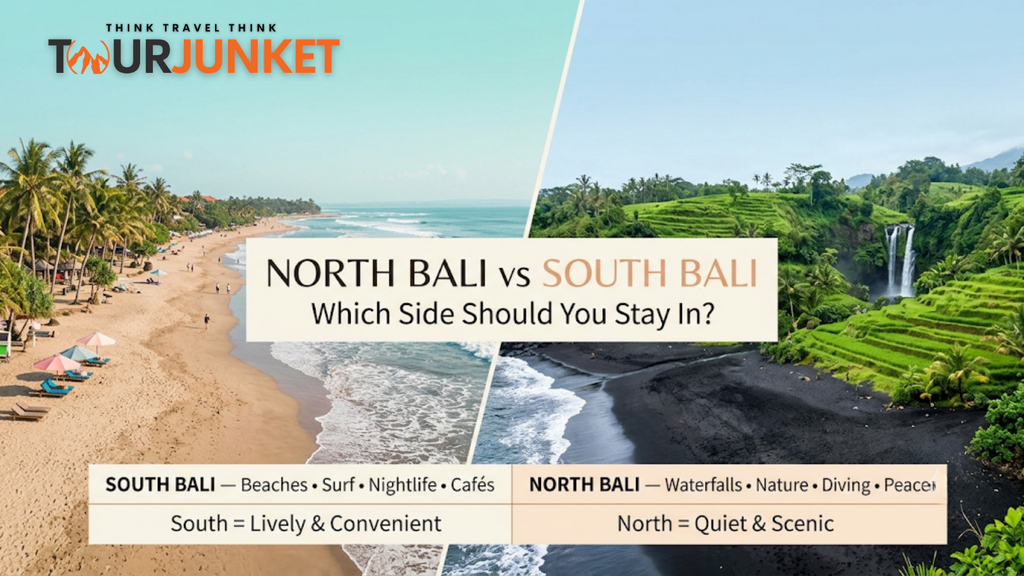
Table of Contents
North Bali vs South Bali: Quick Comparison
| Feature | South Bali | North Bali |
|---|---|---|
| Vibe | Lively, trendy, busy | Peaceful, rural, laid-back |
| Beaches | White and golden sand, surf beaches | Black volcanic sand, calm water |
| Best for | First-timers, couples, surfers, nightlife lovers, digital nomads | Nature lovers, families, divers, budget travelers, slow travelers |
| Nightlife | Excellent | Very limited |
| Crowds and traffic | Heavy, especially Canggu, Kuta and Seminyak | Light |
| Budget | Mid-range to luxury | Generally cheaper |
| Airport access | Very close | Several hours’ drive |
| Activities | Surfing, beach clubs, shopping, spas | Waterfalls, snorkeling, diving, dolphin watching, hiking |
READ MORE: Hidden Bali: 10 Less-Crowded Places to Explore
What Is South Bali Like?
South Bali is the most visited and most developed part of the island, and it’s where most first-time visitors base themselves. Because Ngurah Rai International Airport is here, you can be at your villa or beach within minutes of landing.
Popular Areas in South Bali
1. Seminyak. Upscale and stylish, with boutique shopping, fine dining, beach clubs and luxury villas. It suits couples and travelers who want comfort.
2. Canggu. Bali’s hub for digital nomads and surfers. Expect co-working spaces, smoothie bowls, yoga studios, rice field cafés and a sociable, youthful atmosphere. Traffic can be intense.
3. Uluwatu. Dramatic cliffs, world-class surf breaks, clifftop bars and hidden beaches. It’s the pick for scenery, sunsets and a more secluded luxury feel.
4. Kuta and Legian. Budget-friendly and lively, with lots of nightlife, surf schools and shopping. Some travelers find them crowded and touristy, but the prices and convenience are hard to beat.
5. Sanur. A calmer, family-friendly coastal town with a long beachfront promenade and gentle water. It’s popular with families and older travelers.
6. Nusa Dua and Jimbaran. Resort areas with polished beaches, big hotels and seafood dinners on the sand.
Pros of Staying in South Bali
- Very close to the international airport
- The widest choice of hotels, villas and hostels
- Best nightlife, beach clubs and restaurants on the island
- Excellent surf for beginners and experts
- Easy to book tours, spas, yoga classes and activities
- Great for first-time visitors
Cons of Staying in South Bali
- Heavy traffic, especially in Canggu, Seminyak and Kuta
- Crowded beaches in peak season
- Higher prices in trendy areas
- Less of the “authentic Bali” feeling in tourist-heavy zones
What Is North Bali Like?
North Bali is Bali as many people imagine it before they arrive: green hills, quiet villages, traditional life and empty stretches of coast. It gets far fewer visitors, so the pace is slower and the prices are gentler.
Popular Areas in North Bali
1. Lovina. A relaxed beach town known for black sand, calm water and sunrise dolphin-watching trips. It’s ideal if you want a quiet base with simple guesthouses and local warungs.
2. Munduk. A misty mountain village surrounded by coffee and clove plantations, waterfalls and forest walks. It’s cool, atmospheric and photogenic.
3. Bedugul and the Twin Lakes. Home to the famous Ulun Danu Beratan Temple, botanical gardens and the scenic Buyan and Tamblingan lakes.
4. Singaraja. The old colonial capital of Bali, with heritage architecture and a real local feel.
5. Pemuteran and Menjangan Island. Some of Bali’s best snorkeling and diving, in the northwest corner and largely free of crowds.
6. Sekumpul and Git Git area. A waterfall region with some of Bali’s most impressive falls.
Pros of Staying in North Bali
- Peaceful, uncrowded and relaxing
- Beautiful waterfalls, lakes, hills and rice terraces
- Good snorkeling and diving with calm seas
- Lower accommodation, food and transport costs
- More authentic local culture and village life
- Good for digital detox, slow travel and nature trips
Cons of Staying in North Bali
- Long transfer from the airport (typically several hours)
- Limited nightlife and fewer international restaurants
- Fewer high-end resorts and beach clubs
- Less convenient for public transport and quick day trips to the south
- Beaches are usually not the surfing type
Beaches: North Bali vs South Bali
South Bali beaches are what most people picture: golden sand, rolling waves, and sunsets with a drink in hand. Beaches like Padang Padang, Bingin, Melasti, Balangan and Double Six suit surfers, sunbathers and beach-club lovers. Swimming can be risky at many of them because of currents and big surf, so always check local conditions and flags.
North Bali beaches have dark volcanic sand and much calmer water. They’re better for gentle swimming, snorkeling and sunrise walks than for dramatic surf. Lovina and Pemuteran are the best-known spots, and both are much quieter than their southern counterparts.
Winner: South Bali for surf and classic beach scenes; North Bali for calm, uncrowded water.
Things to Do: Activities and Attractions
Top Things to Do in South Bali
- Watch a sunset at Uluwatu Temple
- Learn to surf in Canggu, Kuta or Seminyak
- Visit beach clubs such as those in Seminyak and Uluwatu
- Take yoga or wellness classes
- Shop in Seminyak’s boutiques and Kuta’s markets
- Take a day trip to Nusa Penida or the Nusa islands
- Enjoy spa treatments, cooking classes and rice terrace walks
Top Things to Do in North Bali
- Chase waterfalls such as Sekumpul, Git Git and Aling-Aling
- Go on a sunrise dolphin-watching tour in Lovina
- Snorkel or dive at Menjangan Island
- Visit Ulun Danu Beratan Temple and Handara Gate
- Explore Munduk’s coffee plantations and hiking trails
- Relax at the hot springs near Banjar
- Take a slow ride through villages and rice fields
Winner: It depends on your style. South Bali offers more variety and entertainment; North Bali offers deeper immersion in nature.
Food and Dining
South Bali is the island’s food capital. Canggu and Seminyak serve everything from Balinese classics to vegan bowls, sushi, Italian, Mexican and specialty coffee. Uluwatu adds clifftop dining with ocean views.
North Bali’s food scene is simpler and more local. Expect fresh grilled fish, nasi campur, satay and family-run warungs at very low prices. Options do exist in Lovina and Munduk, but you won’t find the same international variety.
Winner: North Bali vs South Bali for variety; North Bali for cheap, authentic local meals.
Nightlife
If nightlife matters to you, the choice is easy. South Bali has beach clubs, rooftop bars, live music, DJ nights and late-night spots in Seminyak, Canggu, Kuta and Uluwatu. North Bali is quiet after dark, usually just a relaxed dinner, a drink and an early night before a sunrise activity.
Winner: South Bali, by a wide margin.
Cost Comparison: Which Side Is Cheaper?
Prices change with season and specific location, but as a general rule, North Bali is more affordable than South Bali. Guesthouses, homestays, meals and local transport typically cost less, and you’ll find fewer premium markups. South Bali covers every budget from hostels to ultra-luxury villas, but popular areas like Seminyak, Uluwatu and Canggu can get expensive, especially in the high season (roughly July, August and the December holidays).
Winner: North Bali for budget travelers.
Getting Around and Convenience
South Bali is compact and well served by taxis, ride-hailing apps, scooter rentals and private drivers, although traffic can be frustrating at peak times. Being near the airport is a big convenience for short trips.
North Bali is more spread out, so you’ll usually want a private driver or your own scooter or car. The trip from the airport can take several hours depending on traffic, so plan an extra travel day if you have limited time.
Winner: South Bali for convenience; North Bali for peaceful drives once you’re there.
Best Time to Visit
North Bali vs South Bali dry season runs roughly from April to October, and it’s the best time for either side of the island. The wet season (roughly November to March) brings humidity and afternoon rain. Rain matters less in the south, where there’s plenty to do indoors, but it can affect waterfall trails, road conditions and mountain views in the north. Highland areas like Munduk and Bedugul are also cooler and mistier all year.
Who Should Stay Where?
Stay in South Bali if you are:
- A first-time visitor to Bali
- A surfer or beach-club fan
- Traveling for nightlife, cafés and shopping
- A digital nomad who wants co-working spaces and a social community
- On a short trip and want minimal transfer time
- A couple looking for luxury villas and romantic dining
Stay in North Bali if you are:
- Looking for peace, nature and quiet
- A budget or backpacker traveler
- Interested in snorkeling, diving or waterfalls
- Traveling with children who prefer calm water
- On a longer trip and want to slow down
- Seeking a more traditional side of Bali
Can’t Decide? Split Your Stay
Many travelers do both. A popular approach is to spend a few nights in the south for the beaches, food and nightlife, then head north for two or three nights of waterfalls, lakes and quiet. This gives you the best of both sides and shows how varied the island really is.
Sample Itineraries
7-day split itinerary:
- Days 1–3: Uluwatu or Canggu (surf, sunsets, cafés)
- Days 4–5: Ubud (culture, rice terraces) on the way north
- Days 6–7: Munduk or Lovina (waterfalls, dolphins, relaxation)
5-day relaxed North Bali itinerary:
- Days 1–2: Lovina (dolphins, beach, hot springs)
- Day 3: Sekumpul and Git Git waterfalls
- Day 4: Bedugul (Ulun Danu Beratan Temple, Handara Gate)
- Day 5: Munduk (coffee plantations and hikes)
Conclusion: Which Side of Bali Should You Choose?
There’s no single winner in the North Bali vs South Bali debate, only the side that fits you. Choose South Bali if you want surf, nightlife, cafés, luxury and convenience. Choose North Bali if you want peace, waterfalls, diving and lower prices. If you have the time, combine both: a lively few days in the south and a slower stretch in the north gives you the fullest picture of the island.
Whichever side you pick, book accommodation early for peak season, allow extra time for road transfers, and stay flexible. Bali rewards curious travelers.
READ MORE: Bali South vs North Bali: Which Region Offers the Better Experience?