
Few natural phenomena on Earth compare to the Northern Lights (Aurora Borealis) — a dancing curtain of green, pink, and violet light that ripples silently across the Arctic sky. While Norway, Iceland, and Finland dominate most “aurora bucket list” articles, Russia’s Arctic north is one of the most underrated — and most spectacular — destinations to witness this phenomenon.
From the Kola Peninsula’s snow-covered tundra to the remote wilderness of Siberia, Russia offers some of the darkest skies, lowest light pollution, and longest viewing seasons in the world. Because the country stretches across eleven time zones and touches the Arctic Ocean along an enormous coastline, it holds an extraordinary variety of aurora-watching environments — coastal fjords, birch and pine taiga, frozen lakes, volcanic tundra, and high mountain plateaus — all sitting beneath the auroral oval for months at a time.
In this 2026 Northern Lights in Russia travel guide, we’ll cover everything you need to know: the best places to see the aurora, the best time to go, how the aurora actually forms, how to plan your trip, what to pack, where to stay, and answers to the most frequently asked questions. Whether you’re a first-time aurora chaser or a seasoned photographer looking for a new frontier, this guide will help you plan a smarter, more successful trip.
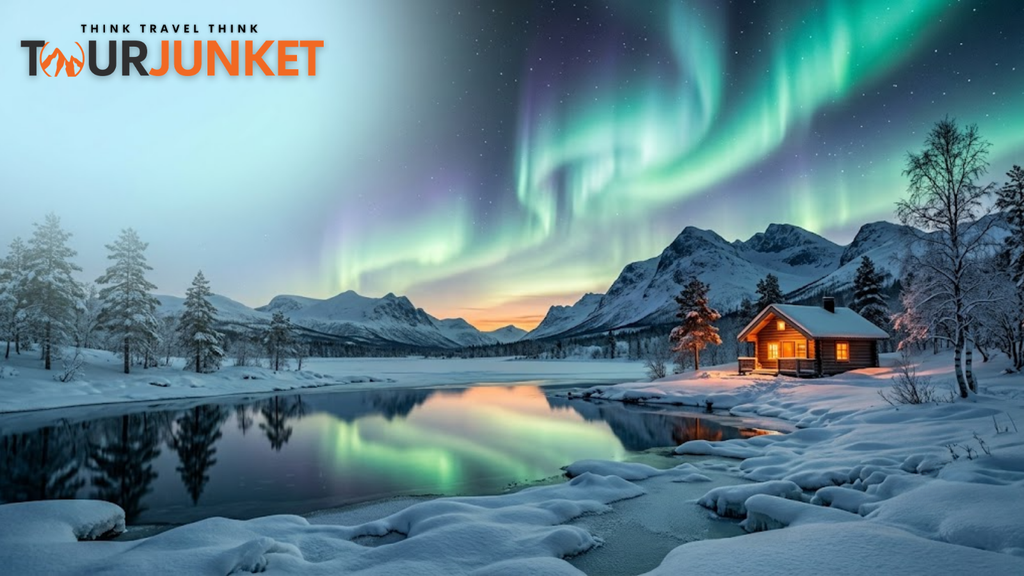
Table of Contents
What Causes the Northern Lights? A Quick Science Primer
The aurora borealis happens when charged particles from the sun (solar wind) collide with gases in Earth’s upper atmosphere, releasing energy as visible light. Green auroras — the most common — come from oxygen molecules roughly 100–300 km above the ground, while rarer red and purple hues come from nitrogen and higher-altitude oxygen collisions. These particles are guided toward the poles by Earth’s magnetic field, which is why the phenomenon is strongest in a ring-shaped zone called the auroral oval, centered on the magnetic poles. Russia’s Arctic regions — particularly the Kola Peninsula — sit almost directly beneath this oval for much of the winter, which is exactly why the region produces such frequent and vivid displays.
Solar activity itself follows an 11-year solar cycle, moving between quiet and highly active phases. During “solar maximum” years, the sun releases more frequent solar flares and coronal mass ejections, which translates into more frequent, brighter, and more widespread auroras — sometimes visible even outside the usual Arctic latitudes.
Why See the Northern Lights in Russia?
- Fewer crowds compared to heavily touristed hotspots in Norway, Iceland, or Finland
- Longer viewing season, thanks to Russia’s vast Arctic territory and true polar night in the far north
- Lower travel costs for lodging, food, and guided tours compared to Scandinavia
- Diverse landscapes — from the fjords of the Kola Peninsula to frozen taiga forests, volcanic Kamchatka, and the wide-open Siberian tundra
- High geomagnetic latitude cities like Murmansk sit almost entirely inside the auroral oval, making sightings more reliable on clear nights
- Cultural depth — many aurora regions overlap with indigenous Sámi and Nenets communities, offering a richer trip than lights alone
Best Places to See the Northern Lights in Russia
1. Murmansk & the Kola Peninsula (Top Pick)
Murmansk is the largest city north of the Arctic Circle and widely considered the best place to see the Northern Lights in Russia. Its high latitude, combined with easy access from Moscow and St. Petersburg via direct flights, makes it the top choice for aurora hunters who want reliability without an extreme logistical challenge.
Best spots near Murmansk:
- Teriberka – a remote fishing village on the Barents Sea coast, famous for dramatic coastal aurora shots with shipwrecks and cliffs as foreground subjects
- Khibiny Mountains – ideal for combining skiing/snowboarding by day with aurora watching by night, with elevated viewpoints away from city lights
- Lovozero – a quiet indigenous Sámi village with minimal light pollution and opportunities to learn about reindeer-herding culture
- Kola Bay coastline – accessible short drives from the city for quick evening viewing sessions
2. Karelia (Near Finland’s Border)
Karelia’s forests, frozen lakes, and traditional wooden villages create a fairy-tale backdrop for the aurora. It’s a great option for travelers who also want to experience Russian countryside culture, wood-fired banyas (saunas), ice fishing, and husky or reindeer sledding between aurora sessions. Because Karelia sits slightly further south than Murmansk, displays are less frequent but still strong during active geomagnetic periods, and the region’s calm lakes make for beautiful mirror-reflection photography.
3. Arkhangelsk Region
A lesser-known alternative to Murmansk, Arkhangelsk offers a more authentic, off-the-beaten-path experience with far fewer tourists and equally strong aurora activity during solar maximum years. The White Sea coastline and traditional wooden architecture of the region add extra character to any aurora-focused itinerary.
4. Norilsk & the Siberian Arctic
For serious adventurers, Norilsk — one of the world’s northernmost cities — offers incredible aurora displays over dramatic industrial-meets-tundra scenery, though logistics are more complex due to permit requirements for foreigners in this closed administrative zone. This route is best suited for experienced travelers working with a specialized local agency.
5. Kamchatka Peninsula
While mainly known for volcanoes, geysers, and bears, Kamchatka’s remote, unpolluted skies occasionally reward patient travelers with striking auroras, especially paired with unique volcanic scenery in the background — a combination almost impossible to find anywhere else on Earth.
6. Yakutia (Sakha Republic)
One of the coldest inhabited places on the planet, Yakutia offers exceptionally clear, dry Arctic air and minimal cloud cover in winter, which can mean excellent aurora visibility for travelers prepared to handle temperatures that regularly fall below -40°C.
Best Time to See the Northern Lights in Russia
The best time to see the Northern Lights in Russia is between late September and early April, when nights are long and dark enough for the aurora to be visible.
| Month | Visibility | Notes |
|---|---|---|
| September–October | Good | Longer nights begin, milder temperatures, good for shoulder-season trips |
| November–December | Excellent | Polar night begins in the far north; near 24-hour darkness in Murmansk |
| January–February | Excellent | Peak season, coldest but often the clearest and driest skies |
| March | Very Good | Strong aurora activity with slightly milder weather than midwinter |
| April | Fair | Nights getting shorter, season winding down, last reliable window |
Pro tip: The polar night in Murmansk (early December to mid-January) means near-constant darkness, maximizing your aurora-watching windows around the clock. Combine this with checking the KP-index (geomagnetic activity forecast) — aim for a KP of 3 or higher for strong, wide-reaching displays, and always cross-check the local cloud-cover forecast, since clear skies matter just as much as geomagnetic activity.
READ MORE https://tourjunket.com/bali-vs-maldives-honeymoon-which-is-better-in-2026/
Is 2026 a Good Year for Northern Lights?
Yes. The sun operates on an approximately 11-year solar cycle, and heightened solar activity around this period is producing more frequent and vivid aurora displays worldwide — including across Arctic Russia. This makes 2026 one of the best years in over a decade to plan a Northern Lights trip, as elevated solar activity increases both the frequency and the geographic reach of visible auroras.
How to Plan Your Northern Lights Trip to Russia
- Choose your base city – Murmansk is the easiest and most reliable starting point for first-time visitors.
- Check flight routes – Direct flights connect Moscow and St. Petersburg to Murmansk in roughly 2–2.5 hours.
- Book aurora tours in advance – Local operators offer guided night excursions with heated transport, photography assistance, and thermal gear rental, which is especially useful if you don’t want to drive yourself in Arctic winter conditions.
- Pack for extreme cold – Arctic winter temperatures can drop well below -20°C (-4°F); layered thermal clothing is essential, not optional.
- Monitor aurora forecasts – Apps and websites tracking the KP-index and cloud cover will help you pick the best nights to head out.
- Allow flexibility – Plan at least 3–5 nights in your destination to increase your chances, since clear skies aren’t guaranteed every night, and a single cloudy evening shouldn’t sink your whole trip.
- Balance daytime activities – Since aurora hunting happens at night, plan daytime excursions like dog sledding, snowmobiling, or visiting local villages so your trip doesn’t feel entirely nocturnal.
- Consider a photography workshop – Many Murmansk-based tour operators run dedicated aurora photography workshops that teach camera settings, composition, and post-processing alongside the viewing experience.
Where to Stay for the Best Aurora Views
- Murmansk city hotels – convenient for city amenities, restaurants, and easy day trips to Teriberka or the Khibiny Mountains
- Eco-lodges & glass-roof cabins near Lovozero or Khibiny – aurora viewing directly from your bed, ideal for travelers who want comfort without sacrificing dark-sky access
- Karelian countryside guesthouses – rustic charm with banya and lakefront views, perfect for a slower-paced trip
- Yurts and heated tents – available in some remote areas for travelers wanting an immersive Arctic camping experience without full exposure to the cold
What to Pack for an Arctic Aurora Trip
- Insulated, windproof winter jacket and snow pants rated for sub-zero temperatures
- Thermal base layers (merino wool is ideal, as it retains warmth even when damp)
- Insulated waterproof boots with good tread for icy terrain
- Hand and foot warmers, plus spare gloves
- A headlamp with a red-light mode (preserves night vision and battery life better than white light)
- A camera with manual exposure controls, a sturdy tripod, and spare batteries kept warm in an inner pocket, since cold drains batteries quickly
- A thermos for hot tea or coffee during long night sessions outdoors
Travel Tips for Visiting Arctic Russia
- Visa & entry requirements: Entry requirements for Russia vary significantly by nationality and can change with little notice due to the current geopolitical situation. Some countries have suspended direct flights and issued travel advisories against visiting Russia, while other nationalities (including e-visa-eligible countries) can still apply relatively easily. Always check your government’s latest travel advisory and the Russian Ministry of Foreign Affairs’ official visa portal before booking.
- Currency: Carry cash (rubles) as international cards (Visa/Mastercard) are not reliably accepted due to banking sanctions.
- Language: English is limited outside major cities — a translation app or local guide is highly recommended, especially in smaller Arctic settlements.
- Photography gear: Bring a tripod, a camera with manual settings, spare batteries, and a wide-angle lens to capture the full sweep of the sky.
- Health & safety: Purchase travel insurance that covers cold-weather activities, and let your accommodation know your general plans if you’re heading out to remote viewing spots after dark.
- Connectivity: Mobile data coverage can be patchy or nonexistent in remote viewing locations, so download offline maps and aurora forecast data before heading out.
Conclusion
Russia’s Arctic north remains one of the most underrated destinations for witnessing the Northern Lights — offering dramatic coastal and tundra landscapes, far fewer crowds than Scandinavia, and reliable aurora activity throughout the long winter season. Whether you base yourself in Murmansk for easy access and strong infrastructure, venture into the forests and lakes of Karelia for a quieter cultural experience, or push further into the wilderness of Kamchatka or Yakutia for something truly remote, a well-planned trip during peak season (November–February) gives you an excellent chance to witness this breathtaking natural phenomenon in 2026.
The key to a successful aurora trip isn’t luck alone — it’s preparation. Choosing the right base city, tracking the KP-index and cloud forecasts, packing properly for extreme cold, and building flexibility into your itinerary will dramatically increase your odds of catching a truly memorable display. With elevated solar activity making 2026 one of the strongest aurora years in over a decade, now is one of the best times in years to plan your trip to Arctic Russia and check the Northern Lights off your travel bucket list.
READ MORE Northern Lights in Russia